















China’s outbound travel market is entering a more complex phase. Traveller numbers continue to rise, but spending is not keeping pace. For North Asia’s airports, retailers and brands, the challenge is shifting from attracting Chinese visitors to securing a greater share of their purchasing decisions.
According to China Trading Desk’s October 2026 Market Outlook, Chinese outbound travel is forecast to reach 182.9 million trips in 2026, up 8.9% year on year, while total overseas travel expenditure is projected to decline 4.3% to US$242.9 billion.
The expenditure forecast includes leisure, education, business and medical travel, and should not be confused with retail spending. Nevertheless, the divergence reinforces an important commercial reality: rising passenger numbers do not necessarily translate into higher spending.
North Asia’s diverging markets
The differences are particularly striking between Japan and South Korea.
South Korea welcomed 5.47 million China-origin visitors during January–September 2026, up 29.2% year on year. Japan recorded approximately 3.34 million arrivals over the same period, down 55.5%, according to destination statistics referenced in CTD’s latest outlook.
Closer to home, Hong Kong and Macao remain major destinations for Mainland Chinese travellers, with CTD forecasting 42.4 million and 31.7 million visits respectively in 2026.
However, visitor volume tells only part of the commercial story.
CTD’s indicative destination models estimate shopping expenditure of US$3.9 billion in Macao, US$3.4 billion in Hong Kong, US$2.9 billion in South Korea and US$2.7 billion in Japan. These figures represent modelled opportunities rather than recorded retail sales.
Each market presents a different challenge. South Korea can capitalise on its growing visitor base and established beauty and duty-free appeal. Hong Kong and Macao need to convert substantial visitor traffic into higher-value purchases. Japan must give travellers stronger reasons to choose its destinations and retail experiences.
For industry leaders, the priority is increasingly to understand not only where Chinese travellers are going, but what motivates them to spend.
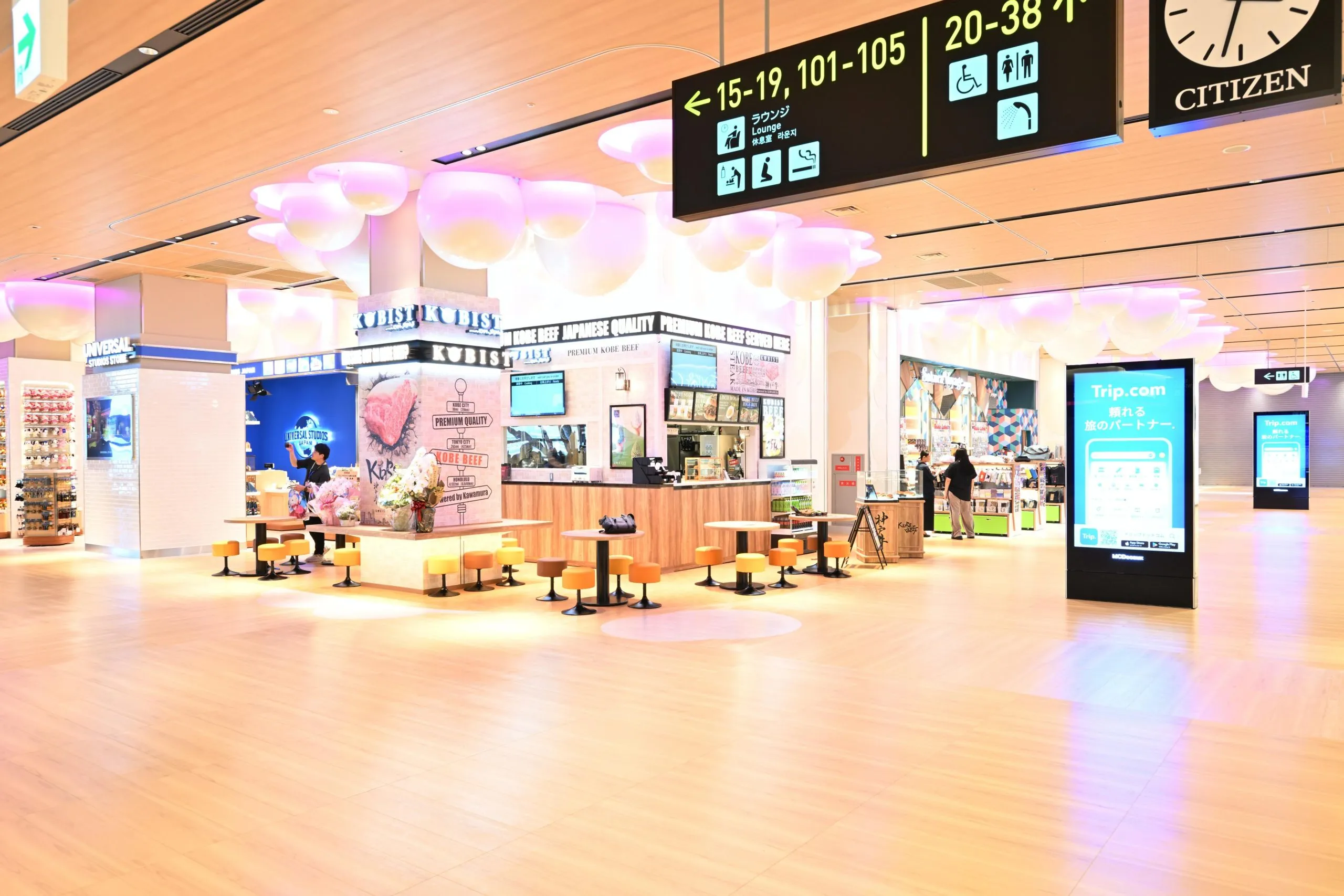
Kansai Airport duty free
Shopping decisions are taking shape before departure
CTD’s Q3 2026 Outbound Travel Sentiment Survey, covering 15,135 respondents, offers further insight into these motivations.
Among travellers considering Japan and South Korea, approximately eight in ten expressed interest in local cuisine. Across the broader survey, 76.2% preferred independent travel or a combination of independent and organised arrangements.
These preferences suggest that retail experiences need to compete for a place within increasingly self-directed itineraries.
A traveller planning a visit to Tokyo or Seoul may be researching restaurants, neighbourhoods and attractions alongside shopping opportunities. For brands and retailers, this creates an opportunity to connect with travellers through destination partnerships, local experiences and relevant Chinese-language content during the planning stage.
Beauty and skincare remain important purchase categories, selected by approximately 70% of South Korea intenders and 63% of Japan intenders among their preferred duty-free products.
Yet one of the survey’s most significant findings concerns what prevents travellers from buying.
Difficulty finding the desired product or brand was cited by 61.8% of respondents to the relevant question, compared with 54.4% citing price and 39.7% citing insufficient time.
While these are stated barriers rather than measured lost sales, they suggest that product discoverability may be as important as promotional pricing.
Can a traveller identify which airport store carries a particular product? Is information about availability, location or collection readily accessible in Chinese?
For operators, addressing these practical questions could prove more effective than relying solely on discounts to stimulate demand.
AI adds another layer to the shopping journey
Chinese social platforms remain central to travel planning. Approximately 60–64% of Japan and South Korea intenders selected Xiaohongshu as a planning channel, while 36–38% included AI among their methods.
To explore how AI handles retail-related decisions, China Trading Desk conducted an exploratory study in October 2026, analysing 54 Chinese-language responses from Doubao, DeepSeek and Qwen across Japan, South Korea and Hong Kong.
The research examined questions travellers might naturally ask: where to buy beauty products, whether downtown or airport shopping offers better value, and how to organise purchases before departure.
The responses revealed distinct patterns.
In Japan, AI recommendations frequently differentiated between downtown shopping for broader product selection and airport retail for convenience. In South Korea, responses emphasised advance planning, duty-free pre-ordering and airport collection. Hong Kong recommendations commonly weighed downtown shopping value against airport convenience.
Although the exercise was not designed to measure actual purchasing behaviour or establish representative platform rankings, it demonstrates how AI can influence the options presented to travellers before they make a purchase.
The study also highlighted the risks of inaccurate information.
In one captured response concerning shopping in Hong Kong before returning to the Mainland, an AI model referenced a RMB5,000 customs allowance. The official general allowance for eligible adult resident travellers entering the Mainland from Hong Kong or Macao is RMB12,000, subject to applicable conditions.
For a traveller comparing shopping options, inaccurate information of this kind could materially affect a purchase decision.
This presents a new consideration for airport operators and retailers: ensuring their products, locations, services and purchasing conditions are accurately represented across the digital channels travellers consult, including AI-generated recommendations.

Competing for the decision, not just the passenger
The findings point to a broader change in how the industry should engage Chinese outbound travellers.
Travel retail has traditionally focused on attracting passengers and converting them once they reach the store. But many decisions are being made much earlier, through social content, travel planning and increasingly AI.
For airports and retailers, the opportunity is to influence those decisions before travellers arrive, while making it easier for them to find the right products and complete a purchase.
For the industry, this calls for greater coordination between airport operators, retailers, brands and destination marketing partners.
Reaching travellers earlier, maintaining accurate Chinese-language information and simplifying product discovery, reservation and collection are practical areas where marketing and commercial teams can work together.
As North Asia’s travel market evolves, the competitive advantage may not belong simply to destinations attracting the most visitors or retailers offering the deepest discounts.
It may belong to those that earn a place in the traveller’s plans—and remain part of the decision when it comes time to buy.
Subramania Bhatt, Founder and CEO of China Trading Desk, presented the research at the APTRA North Asia Forum in Hong Kong on 12 November 2026.
Sources: China Trading Desk October 2026 China Outbound Travel Market Outlook; CTD Q3 2026 Outbound Travel Sentiment Survey (n=15,135); CTD North Asia AI Travel & Shopping Discovery Study (October 2026, 54 responses).