













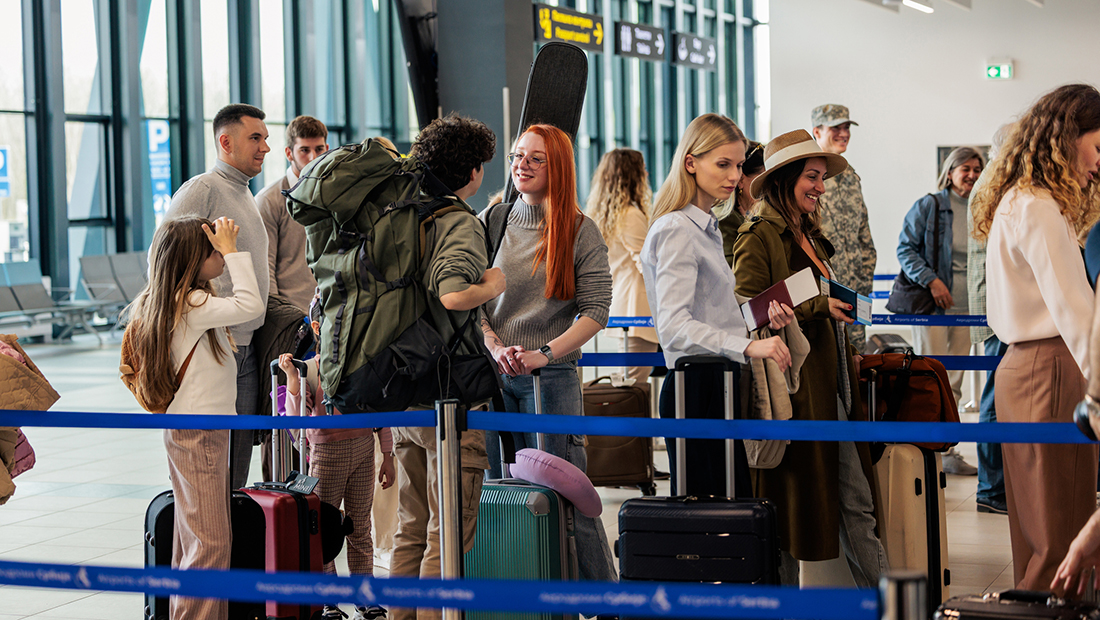
Airport crowds, flu season, and the stress of flying or driving can heighten your risk for coming down with colds, fever, and other illnesses while traveling for the holidays. But there are a number of ways you can protect yourself and loved ones to ensure your trips are sickness-free. (Photo credit: Getty Images)
DALLAS – Nov. 11, 2026 – Thanksgiving and the winter holidays bring with them some of the busiest travel days of the year, and while it’s a festive time for families and other loved ones, it can also create problems for your health.
The crowds in airports, combined with flu season, and the stress of driving or flying can increase your risk for post-travel colds, fever, fatigue, and digestive diseases.
“Travel introduces health risks we may not encounter at home. Understanding those risks and preparing ahead of time can help prevent a health issue from disrupting an otherwise great trip,” said Katherine Liang, M.D., Assistant Professor of Family and Community Medicine at UT Southwestern Medical Center, who specializes in primary care and preventive medicine.

Katherine Liang, M.D., is Assistant Professor of Family and Community Medicine at UT Southwestern.
Fortunately, there are ways to protect yourself and those closest to you. If you’re planning a journey this holiday season, here are a few healthful travel hacks to consider:
- Hydrate before and during the flight. At thousands of feet above sea level, the recycled air inside a plane is much drier than on the ground, causing moisture to leave your mouth, skin, eyes, and nose, which makes you much more susceptible to dehydration. To prevent this, drink water before and during the flight, rather than coffee, soft drinks, or alcohol, and consider packing electrolyte packets, travel-sized bottles of lotion, lip balm, eye drops, and nasal spray in your carry-on.
- Bring hand sanitizer and use it frequently. High-touch surfaces are everywhere in airports and roadside gas stations. Germs and bacteria accumulate on door handles, armrests, tabletops, kiosk screens, public seats, charging stations, water fountains – the list goes on. Washing your hands regularly and using hand sanitizer can help reduce your odds of getting sick.
- Keep your medications close. When you’re buckled up for a long trip – whether by car or plane – make sure your medicine is easily accessible, preferably in a carry-on bag or personal item. You don’t want to miss a dose due to flight delays or, worse, lost luggage. Many airlines allow passengers to bring approved medical devices, such as continuous positive airway pressure (CPAP) machines, in addition to their allotted carry-on item. It would be a good idea to check with the airline before your trip.
- Stretch your legs whenever possible. Any traveler who sits in a confined space for longer than 4 hours could be at risk of developing blood clots or deep vein thrombosis. Many clots dissolve on their own, but in some cases, they can break off and cause a blockage in the lungs, known as pulmonary embolism, or elsewhere. That’s why it’s recommended to get up and walk around at a rest stop or while the plane is cruising at least a few times during your trip.
- Consider wearing compression socks. If you’re at elevated risk of developing blood clots due to a recent surgery or traumatic injury, pregnancy, or previous history of blood clots, you can wear compression socks, which enhance circulation in your feet and legs and help prevent blood from pooling or clotting. Also called anti-embolism socks or thromboembolic deterrent (TED) stockings, they can be purchased at many retail stores, pharmacies, and online.
- Consider masking up in crowded indoor spaces. Flu season typically starts in the fall and lasts through the new year. As the colder temperatures force everyone indoors and in closer proximity to one another, cases of airborne illnesses and respiratory viruses tick up. Wearing a well-fitting mask over your nose and mouth can add a layer of protection from COVID-19, flu, RSV (respiratory syncytial virus), and other respiratory illnesses, particularly for those who are older or immunocompromised. Ask your doctor if wearing a mask while traveling is recommended.
- Pack nutritious snacks. Traveling on an empty stomach can leave you feeling lightheaded, nauseous, shaky, or weak, so don’t hesitate to bring healthy and filling snacks, such as trail mix, nuts, jerky, protein bars, and fruit – all are TSA-approved. This is particularly valuable for travelers with dietary sensitivities and allergies because airport and gas station options can be limited.
- Get quality rest before and during your trip. Whether you stayed up late packing, had trouble sleeping in a hotel room, or faced the drain of jet lag, a lack of sleep can affect all aspects of your trip. Try packing a sleep kit (eye mask, earplugs, travel pillow) as well as a clip to seal gaps in hotel curtains. You may also consider some over-the-counter sleep aids, such as melatonin. Good sleep is essential to growth, healing, optimal brain function, and a strong immune system. It will also help with travel-related stress.
- Meditate and breathe. If you’re feeling overwhelmed by the travel experience, there are several mindfulness exercises you can practice to ground yourself – even thousands of feet in the air.
- Box breathing: Inhale for 4 seconds, hold it in for 4 seconds, exhale for 4 seconds, and hold your breath again for 4 seconds.
- The 5-4-3-2-1 technique: Name 5 things you can see, 4 things you can touch, 3 things you can hear, 2 things you can smell, and 1 thing you can taste.
- Sensory tool: If you’re a more tactile person, you may benefit from a fidget toy.
- Make sure your vaccinations are up to date. Holiday travel coincides with flu season. Before heading out, check whether you’re current on recommended seasonal vaccines, particularly for respiratory illnesses. If you have questions about which vaccines are appropriate for you, talk with your healthcare provider.
“Holiday travel should be about spending time with the people you care about,” Dr. Liang said. “You can’t eliminate every travel-associated health risk, but simple precautions before and during your trip can help you stay healthy and make the most of your holiday season.”
About UT Southwestern Medical Center
UT Southwestern, one of the nation’s premier academic medical centers, integrates pioneering biomedical research with exceptional clinical care and education. The institution’s faculty members have received six Nobel Prizes and include 28 members of the National Academy of Sciences, 26 members of the National Academy of Medicine, and 14 Howard Hughes Medical Institute Investigators. The full-time faculty of nearly 3,400 is responsible for groundbreaking medical advances and is committed to translating science-driven research quickly to new clinical treatments. UT Southwestern physicians in more than 80 specialties care for more than 143,000 hospitalized patients, attend to more than 470,000 emergency room cases, and oversee nearly 5.3 million outpatient visits a year.