






The historical and cultural wealth of Imathia, the prospects for four-season tourism and the international promotion of Greece’s Macedonian Land are highlighted by Deputy Regional Governor Konstantinos Kalaitzidis in an interview centered on the 50th anniversary of the discovery of the royal tombs of Aigai and an invitation to Greek-Americans to get to know firsthand the land of Philip II and Alexander the Great.
(TNH Gateway to Greece: The Winter Side of Greece – A Journey through Northern Greece)
The National Herald: Greece has been identified internationally with its islands and summer. What different image of the country does Imathia reveal to visitors, and why is it a year-round destination?
Konstantinos Kalaitzidis: Imathia reveals a different, multidimensional image of Greece. A Greece that is not limited to the sea and summer, but uniquely combines nature, history, culture, productivity, and gastronomy.

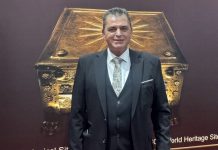
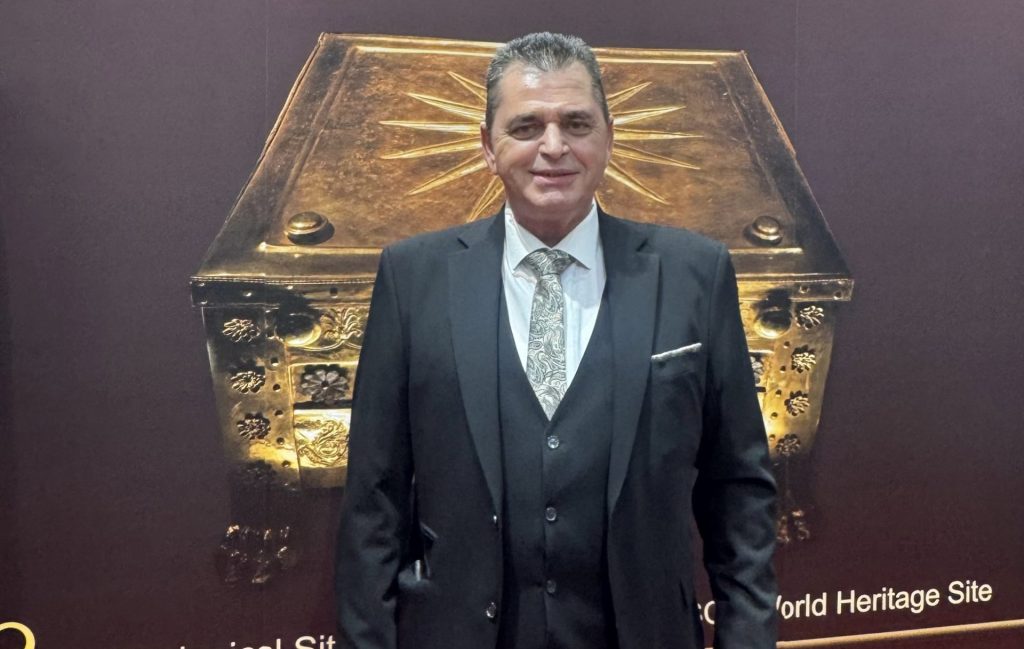
Deputy Regional Governor Konstantinos Kalaitzidis
It is a place of striking contrasts, where within short distances one encounters the fertile plain of Alexandria, the blossoming peach trees of spring, the vineyards of Naoussa, and the snow-covered peaks of Vermio. It also has an important historical and cultural heritage, from Aigai and Aristotle’s School at Mieza to the Byzantine monuments of Veria and its historic Jewish quarter.
This picture is complemented by natural wealth, local flavors, excellent agricultural products, and a centuries-old winemaking tradition, creating a complete experience for visitors in every season of the year.
Imathia’s advantageous geographical location, just 45 minutes from Thessaloniki and in close proximity to important archaeological destinations such as Dion and Pella, further strengthens its potential.
Our objective is to highlight this diversity and establish Imathia as an authentic four-season destination: a place whose appeal is not exhausted by a summer visit, but offers different reasons for discovery and meaningful experiences in every season.
TNH: Aigai is one of Greece’s most important archaeological sites and a UNESCO World Heritage Site. How can Imathia’s cultural heritage gain even greater international recognition?
KK: Aigai is not simply an important archaeological site. It is a cultural treasure of international significance, inextricably linked to the Macedonian dynasty, Philip II and Alexander the Great, figures who shaped the course of world history.
In the same wider region is Aristotle’s School at Mieza, where the great philosopher taught the young Alexander. It is truly unique that three emblematic figures come together in this place: Philip, who created the conditions, Aristotle, who shaped the thinking, and Alexander the Great, who carried Greek culture across an enormous geographical expanse.
However, Imathia’s cultural identity does not end at Aigai. Veria, with its 48 Byzantine and post-Byzantine churches, the Apostle Paul’s Tribune – from which he preached – and the historic Jewish quarter of Barbouta, highlights a unique journey through civilizations and religious traditions.
The challenge is to connect this invaluable wealth through integrated cultural routes, utilize the possibilities of digital technology, and strengthen the region’s international promotion, so that Imathia can gain the position it deserves on the global cultural map.
The year 2027 presents a particular opportunity in this direction, when 50 years will have passed since Manolis Andronikos discovered the royal tombs of the Great Tumulus. We want this anniversary to provide an occasion for international cultural and scientific activities and to bring Imathia to the center of international attention.
We therefore extend, starting now, an open invitation to the Greeks of America, all of the Greek diaspora, and friends of Greece throughout the world to visit Imathia in 2027. Because this place does not simply contain important monuments. It contains elements of the history that shaped the modern world.
Imathia’s history is not simply a chapter of the past. It is also a powerful passport to its future.
TNH: Seli and 3-5 Pigadia are important winter destinations. What opportunities does Imathia’s natural environment offer beyond snow?
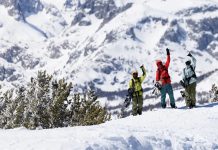
KK: Vermio is one of Imathia’s great natural treasures and has potential that extends far beyond winter tourism. The forests, rich vegetation, mountain trails, and changing landscapes create a unique environment for activities and experiences throughout the year.
Seli and 3-5 Pigadia are important bases for winter tourism, but they can also serve as starting points for hiking, cycling, nature trails, and outdoor activities during the other seasons.
Agios Nikolaos in Naoussa, with its centuries-old plane trees and flowing waters, holds a special place, as does the Arapitsa River, which is an integral element of the region’s character.
Our aim is to connect this natural wealth with traditional settlements, cultural heritage, gastronomy, and local entrepreneurship. In other words, to create an integrated network of experiences that will give visitors reasons to return in every season of the year.
Because the mountain is not just snow and ski resorts. It is a living natural and economic resource that can support sports, recreation, local development and, ultimately, a more sustainable tourism model for all of Imathia.
TNH: Imathia has a strong agricultural and food identity, while Naoussa has associated its name with a long winemaking tradition. How can local production, wine tourism, and gastronomy create an attraction in their own right?
KK: Imathia is a place that draws its identity and wealth from its land. From the fertile plain of Alexandria and the orchards with their famous peaches to the cherries of Rodochori and the vineyards of Naoussa, it has a strong agricultural and food tradition with significant international reach.
The peach, fresh or processed into canned fruit, has traveled to markets throughout the world, while Naoussa’s Xinomavro is one of Greece’s most important wine ambassadors. Together with beef, Veria’s revani, and the other local products, they create a gastronomic identity with a distinctive character.
This is also where our great development opportunity lies: to connect agricultural production with tourism, producers with dining establishments, and local products with international markets. We want visitors not simply to buy a product or taste a wine, but to get to know the place where it is produced, the people behind it and its history.
Wine tourism and agricultural and food tourism can create comprehensive experiences through visits to wineries, wine tastings, visits to production facilities, and local gastronomic routes.
Our goal is for gastronomy and production to develop into attractions in their own right, creating new opportunities for producers, businesses, and the young people of the region.
Gastronomy is a different way of getting to know a place, and in Imathia we have something very important to tell: a story that begins with the land, passes through production and reaches the visitor’s table.
TNH: Beyond the well-known archaeological and tourist destinations, what other side of Imathia would you like visitors to discover?
KK: I would like visitors to discover the more authentic and human side of Imathia. A place that has not only important monuments and natural beauty, but also deep cultural memory, living traditions, and a strong social identity.
Veria, for example, is not only its Byzantine churches. It is also Barbouta, the historic Jewish quarter with its Synagogue, which bears witness to the coexistence of different communities and cultures over time.
Naoussa, with the Arapitsa River, Agios Nikolaos, and the unique ‘Genitsaroi and Boules’ traditional event, preserves a tradition that is not simply presented to visitors but is experienced by the local community itself.
On Vermio, Panagia Soumela is a special place that evokes particular emotions and historical memories, a symbol of Pontian tradition and the continuity of Hellenism. It is a place that has special significance for Greeks of the diaspora as well, since it connects younger generations with the roots, memories, and historical journey of their ancestors.
I would also like visitors to become acquainted with the dynamism of local communities, sports clubs, cultural associations, events, and the people who keep the region’s creativity alive. Because sports and culture are not merely activities, but elements of education, social cohesion, and investment in the younger generation.
I believe this is also the real value of Imathia: it offers not only sights to visit, but opportunities to meet people, participate in traditions, and feel the character of a place.
Because a destination acquires its true identity not only from what it inherited from the past, but above all from what it continues to create in the present.
TNH: What are the plans of the Region of Central Macedonia and the Regional Unit of Imathia for upgrading and internationally promoting the tourism product?
KK: Tourism development requires strategy, cooperation, and consistency. It is not enough for a place to have important attractions and natural wealth. It must be able to highlight them, connect them into an integrated tourism product, and communicate them in a modern and effective way. The Region of Central Macedonia, through its organized Tourism Directorate, and the Regional Unit of Imathia, through its Tourism Office, are working to highlight the region’s distinctive characteristics and connect them with broader regional planning.
We place particular emphasis on digital promotion, the creation of modern audiovisual material, participation in outreach activities, and, above all, cooperation with municipalities, professionals, and organizations.
A characteristic example of this philosophy is the Imathia Quality initiative, which travels throughout Greece and abroad, promoting Imathia’s quality, productive identity, gastronomy, and comparative advantages.
We believe that tourism should not operate in isolation from the rest of the economy. On the contrary, it should create synergies with the primary sector, manufacturing, dining establishments, hospitality, and small businesses, creating added value for the entire region.
The objective, therefore, is not simply to attract more visitors. It is to create quality and sustainable tourism that will strengthen the local economy, create opportunities for young people, and bring substantial benefits back to local communities.
Because for us, the success of tourism is measured not only by how many people come to a place, but also by how much better life becomes for the people who live and create there.
TNH: How can Imathia make use of its relationship with the Greek diaspora in America and attract more Greek-American and American visitors?
KK: The Greek diaspora of the United States is a valuable ambassador of our history, tradition, and culture. For Imathia, this bond has particular significance, as it is connected both with Macedonian history and with the deep emotional relationship of Pontian Hellenism with Panagia Soumela.
We want to reach not only first-generation Greeks in America, but also the second and third generations, as well as Americans interested in Greek history and culture. To give them the opportunity to discover their roots, but also a modern, creative, and productive Macedonia.
Imathia can offer a complete experience: Aigai and the palace of Philip II, Aristotle’s School, Veria with its multicultural heritage, Panagia Soumela, the natural environment of Naoussa, the wineries and the region’s gastronomic tradition.
The year 2027 presents a particular opportunity and we aspire for the anniversary of the discovery of the royal tombs of the Great Tumulus to provide an occasion for international cultural activities and to bring Imathia to the center of attention of the Greek diaspora and the American market.
Cooperation with the Greek diaspora press, Greek cultural associations, tourism organizations, and industry professionals can create meaningful bridges of communication and outreach.
I would therefore like to address a special message to the Greeks of America: Macedonia is not just a page in the history of your ancestors. It is a living place, with deep roots, important history, creative people, and a dynamic present. We invite you to get to know it, rediscover your relationship with the homeland, and become part of its modern course.
In 2027, we await you in Imathia. In the land where the history of Alexander the Great remains alive and Greek heritage meets modern creativity.