
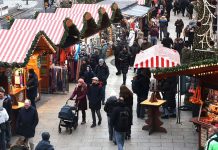
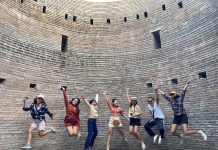










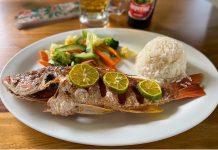

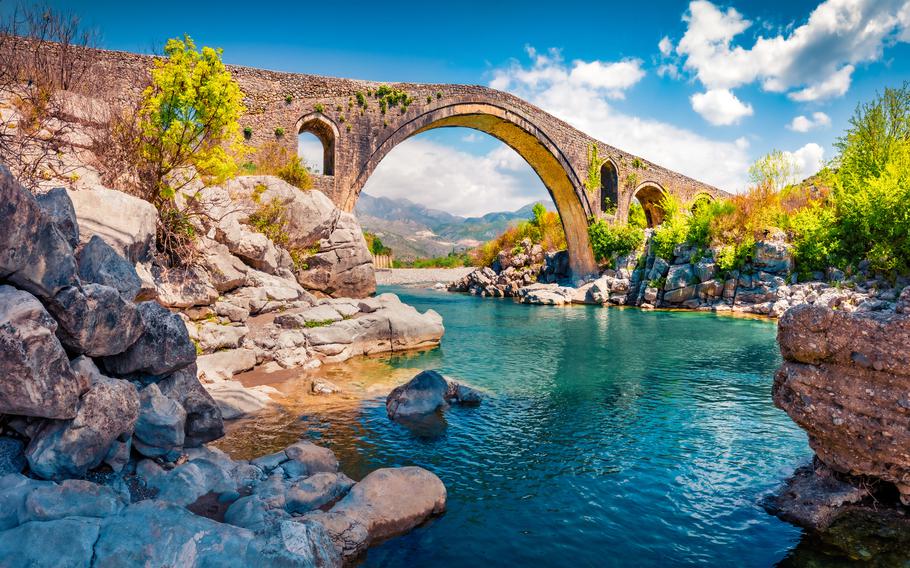

Our Balkan Adventure started in Albania’s colorful capital, took us through Montenegro’s striking mountains, Croatia’s fortified coastline, Bosnia and Herzegovina’s resilient heart and finally into Slovenia. (Andrew Mayovskyy (Adobe Stock))
Our Balkan Adventure started in Albania’s colorful capital, took us through Montenegro’s striking mountains, Croatia’s fortified coastline, Bosnia and Herzegovina’s resilient heart and finally into Slovenia – defining a winding journey through cultures and landscapes that define this magnificent region.
Albania
We began with a day in Tirana, Albania, a capital full of contrasts and history. The vastness of Skanderbeg Square set the tone of the city. Bunk’Art 2 is a converted Cold War bunker that tells the sobering history of Albania, something history buffs will truly appreciate.

We began with a day in Tirana, Albania, a capital full of contrasts and history. (Deborah Herceg)
We escaped the heat by taking the Dajti Express, the longest cable car in Balkans, to the top of the mountain overlooking Tirana. After we enjoyed the scenery, we played a game of family minigolf, one of several activities available at the top. The day ended in a nearby restaurant where we enjoyed the views and the traditional Albanian dish byrek (burek), which remains one of my favorites.
The next morning, we visited the historic castles of Rozafa and Kruja. Rozafa dates back to the 3rd century B.C., and it remained out of Ottoman control until the 15thcentury. Kruja, which never fell into Ottoman hands, is considered a cornerstone of Albanian identity.
Montenegro
Shortly after crossing the border, we arrived at the Old City of Kotor, a UNESCO World Heritage site. The city has immense cultural landmarks, natural beauty and surprisingly lively nightlife. Cat lovers will find Kotor especially charming: Locals believe that cats once protected the city, so nearly every shop and corner seem to have a feline resident. There’s even a cat museum.
The following day we took a small trip to Lovćen National Park, home to the mountain and a mausoleum of Petar Petrović-Njegoš, one of the Montenegro’s most beloved historical figures. This was one of the most peaceful locations we have ever visited and the views are breathtaking. More than 80 percent of Montenegro is visible from the top.

Shortly after crossing the border, we arrived at the Old City of Kotor, a UNESCO World Heritage site. (Deborah Herceg)
In addition to its natural beauty, the National Park now features a cable car that brings visitors to the top, and an alpine coaster that quickly became one of our favorites. You could easily spend a whole day there. In the afternoon, we relaxed at a local beach. Don’t miss out on the local Montenegrin prosciutto and cheese; your taste buds will thank you for it.
Croatia (Part 1)
From Montenegro, we continued to beautiful Dubrovnik. While “Game of Thrones” tours draw many visitors in, the city boasts itself with its amazing history of being an Independent Republic for centuries, and only with the fall of the Venetian Republic, joined Croatia.
One can still witness traces of destruction from the Homeland War from 1991 to 1995, a chapter in resilient Croatian history that will never be forgotten. The most impressive sight is the City Walls, which are also listed as a UNESCO World Heritage site. Walking them is a must as they offer a powerful sense of how Dubrovnik maintained independence.
After exploring Dubrovnik, we spent a day sailing the Elafiti Islands, a group of islands north of Dubrovnik, stopping at three for swimming and snorkeling. With the food served onboard and beautiful views of the Adriatic, this was one of the best family getaways.
Bosnia and Herzegovina
Our journey continued the following day to the Herzegovinian region of Bosnia and Herzegovina. We stopped at Kravice Waterfall, a beautiful spot and a popular escape for locals seeking relief from summer heat, before heading to Mostar.

Mostar’s Old Bridge, a UNESCO World Heritage site, was destroyed during the Homeland War and later rebuilt using its original specifications. (ttinu (Adobe Stock))
Mostar’s Old Bridge, a UNESCO World Heritage site, was destroyed during the Homeland War and later rebuilt using its original specifications. It represents resilience and endurance. Bridge-jumping competitions are still being held – the river Neretva has a temperature of negative 42 degrees Fahrenheit year-round making jumping very dangerous. I held my breath as I watched a couple of brave souls jump into the icy water.
Croatia (Part 2) and Slovenia
Returning to Croatia, we revisited Split and Diocletian’s Palace – another UNESCO World Heritage Site. The Palace is remarkable. It was built by Emperor Diocletian around 300 A.D. for retirement. He was the only Roman Emperor known to retire. What is truly magical about it, is that it is still lived in and full of shops, restaurants and pubs.
Our journey continued to Varaždin, my hometown in Croatia, known as “little Vienna,” for its architecture and charm, located near the tri-border area of Slovenia, Hungary and Croatia. Each August, Varaždin hosts Špancirfest, one of the largest festivals in Croatia. Our final destination on this trip was Lendava, Slovenia, where we rode the only double zipline in the country over the vineyards.

Our journey continued to Varaždin, my hometown in Croatia, known as “little Vienna,” for its architecture and charm, located near the tri-border area of Slovenia, Hungary and Croatia. (Deborah Herceg)
Traveling the Balkans provided us with an enormous appreciation for the diversity of cultures and religions. We have seen beautiful landscapes and incredible landmarks, but the most rewarding part was gaining a deeper understanding of the Balkan’s cultural melting pot.
Editor’s Note: This article was written by a member of the local military community, not an employee of Stars and Stripes. Neither the organization nor the content is being represented by Stars and Stripes or the Department of War.